
AD | Growing as a food blogger can seem tough. Whether you’re a hobby blogger or hoping to make some big influencer money, we all want people to read our content. After all, we have put the work in, we don’t want zero views. There’s a lot of competition from just about every angle, whether you’re aiming for 10 views or 10,000. But here are a few tips on how to grow as a food blogger and help you boost your traffic from all major platforms.
How To Grow As A Food Blogger
Search Engines
The vast majority of my traffic comes via Google, so keywords are a big factor for me, it’s important to look at your likelihood to rank and see your competition.
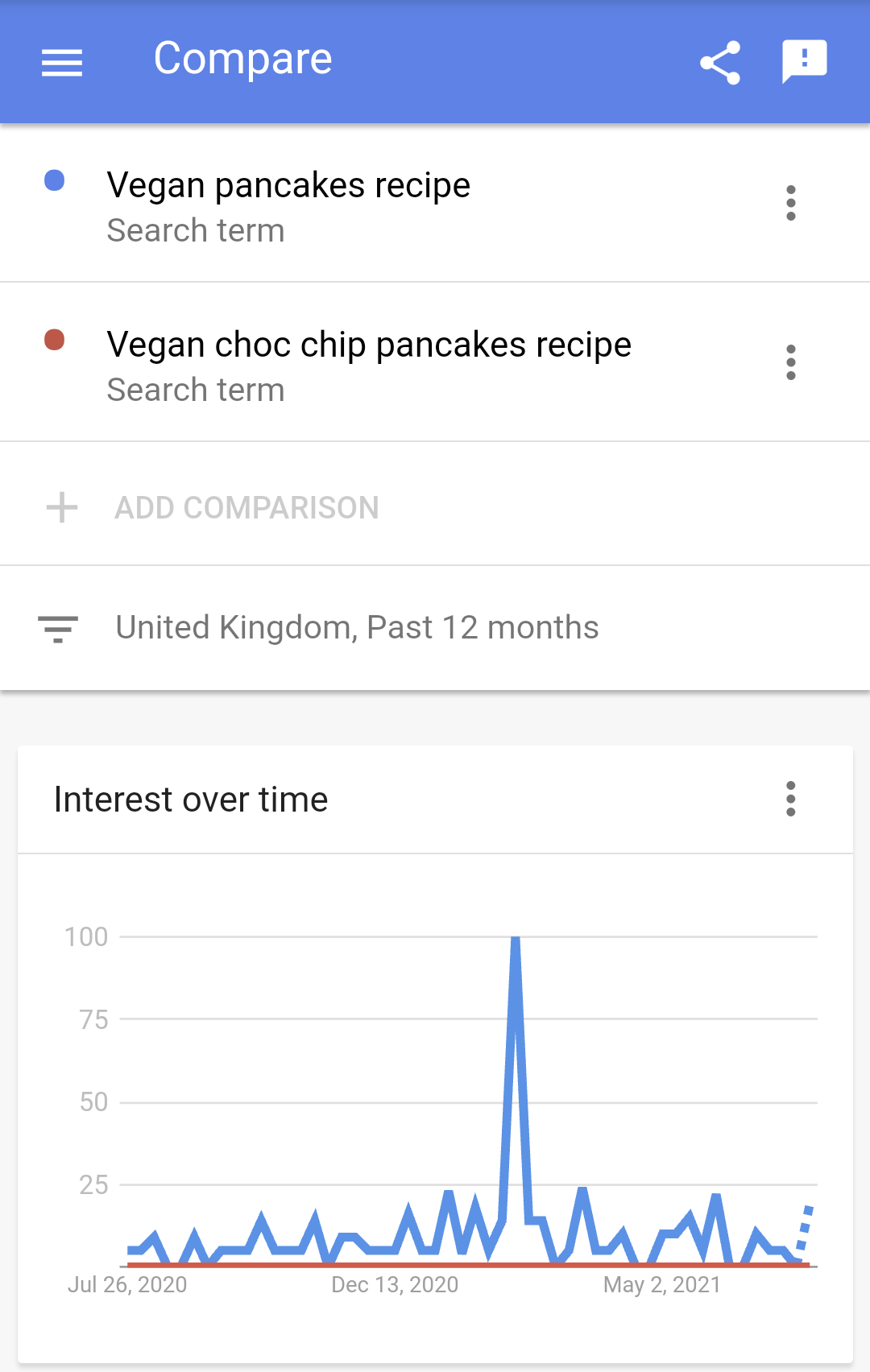
For example, as a free from food blogger, there’s always a little debate in my head whether to include the word vegan or gluten free in my title. Do I include both? Which goes first? And how specific do you make the keyword search? For example, more people are going to search for vegan pancakes recipe than they are a vegan peanut choc chip pancake recipe. The latter is super specific, with less search density. But there’s also likely to be less competition, and you’d likely find it easier to rank. And if you opt for vegan pancakes once, any other variety of pancake you make down the line would have to be aiming for a more specific search term to prevent you competing against your own content.
So, how do I decide what I want to do?
Google Trends
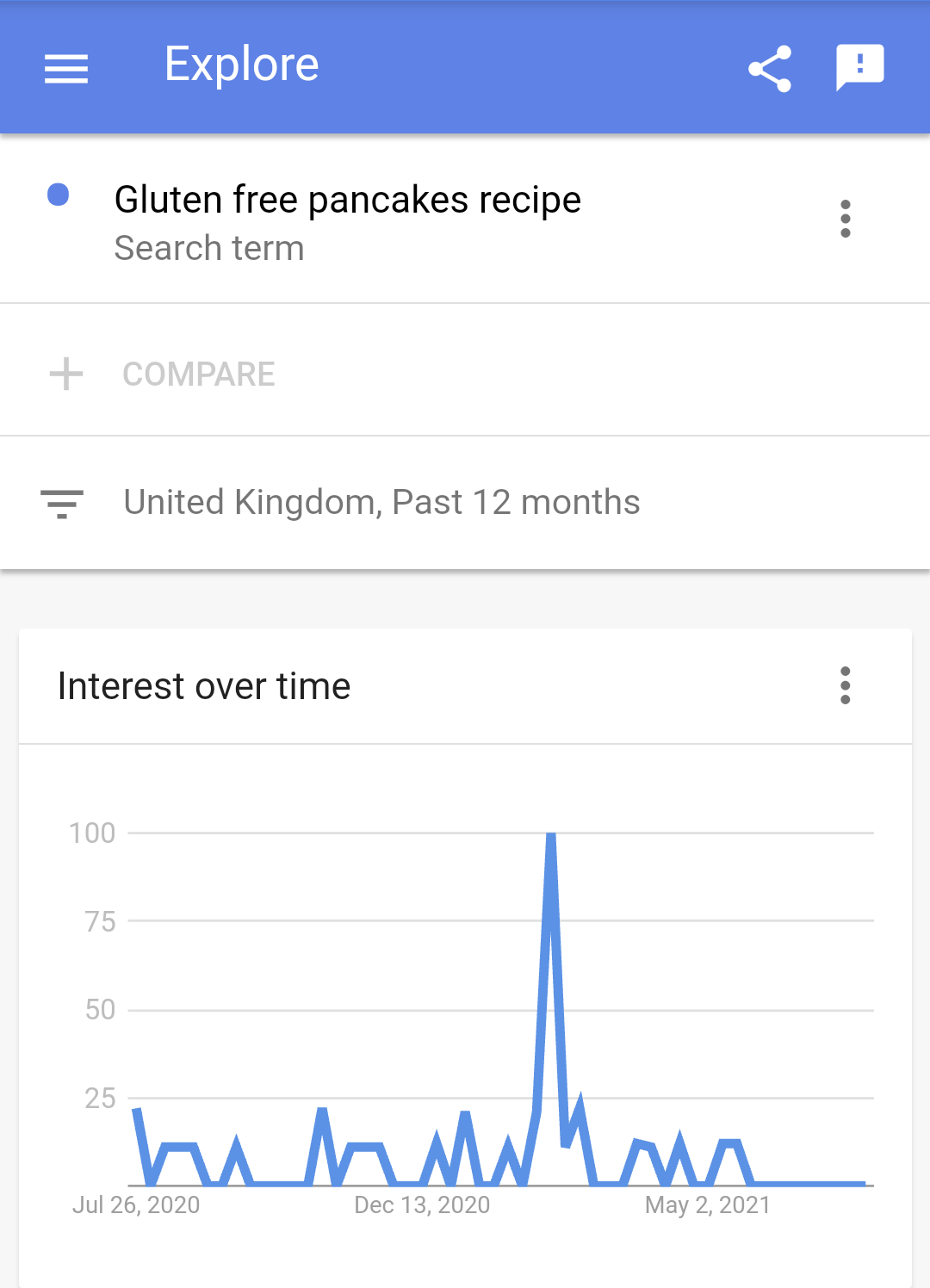
There are many keyword tools you can pay for, but you might not want to spend that money yet. And there are free things you can do to help you figure out your keywords, like looking at Google Trends. I look up all of my keyword options on Google Trends to see their search frequency and rule out any terms that get little to no searches.
If I’ve still got a couple of maybes and no obvious winner, the next task is to check out the competition for each of those terms.
Check out the competition
Google any keyword phrase I’m potentially going to use is step two. There’s nothing to say that you can’t outrank someone like BBC Good Food, but if you see posts from well-established sites like theirs at the top, they’re going to be harder to outrank than websites that are a similar size and age as your own (or smaller). If there are two potential keyword terms in mind that you’re struggling to choose between and the competition for one looks easier to beat, maybe opt for that one.
Evergreen Content
One blessing about being a food blogger is that everyone needs to eat, and the majority need to cook. People need to search for recipes. Okay, they don’t need to. But I’m sure more people search for them these days than buy cookbooks.
The majority of recipes are evergreen by nature, those pancakes are going to be just as great in 5 years as they were yesterday. But you can help them rank by not accidentally dating them. The Best Summer Salad Recipes are going to be searched every time people start to see a hint of the sun. The Best Summer Salad Recipes 2021 are relevant for about a month as we transition to the end of spring and that’s about it.
Yes, you can update older posts to try and make them relevant again, but you’ll make things easier for yourself if you don’t include dates unnecessarily and try to avoid them in your URL structure. You may also want to consider participating in brand collaborations to help you grow as a food blogger. You can create evergreen content while being paid at the same time. It’s a great opportunity to extend your reach and ensure you get your writing in front of new audiences.

Social Media
Hashtags/ Tagging
We all know that hashtags and tagging other accounts are a great way to get more promotion on social media, and that’s instant views unlike SEO, it can still be really helpful in the beginning.
If you’re a new blogger with little to no domain history, you can still bring in some good views from social media even when Google barely knows you exist if you use the right hashtags, whether that’s retweet accounts on Twitter, or words relating to your content on Instagram.
Photography
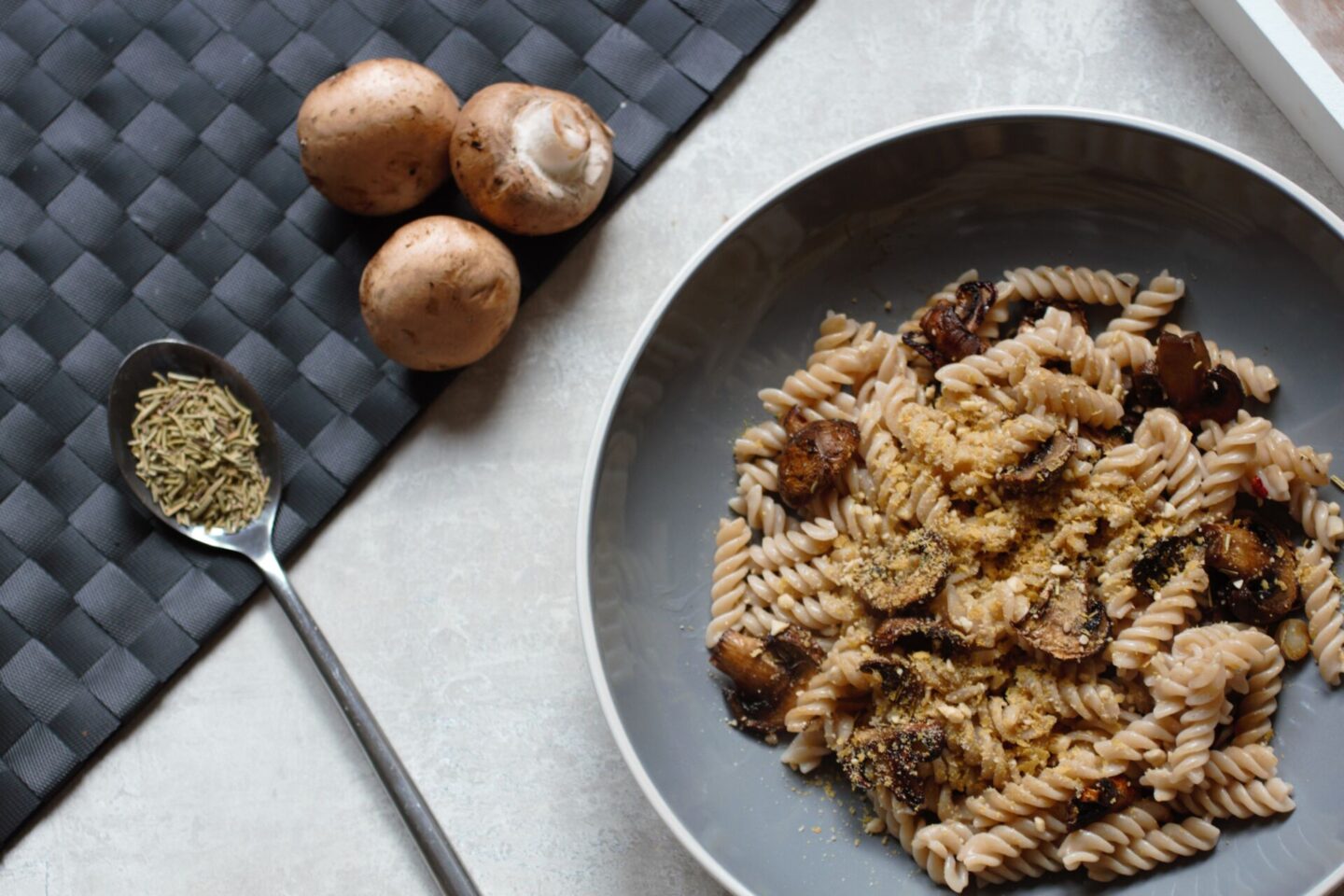
It’s no secret that people eat with their eyes sometimes. That’s very true on social media. If you Google a recipe and something that doesn’t look the best pops up first, you’re more likely to click on it than if something looks bad on Instagram.
People search Pinterest for recipes all the time, and the food boards people have look INCREDIBLE. So, a sloppy shot is never going to bring the views in, no matter how good it tastes.
I say this as a very average photographer, but the post will always do better if the main image looks good. And if someone is scrolling through their feed and sees a great looking dish, they might still click even if they weren’t searching for food content.
Are you a food blogger with any tips to add to this list?
Until next time,
Sophie
Thanks for sharing such a great idea!
Meredith,
4 Professional Electricians
I think that great imagery is amazing when it comes to food!
Danielle | thereluctantblogger.co.uk
So interesting!
Thank you for the helpful tips!
These are some great blogging tips, thanks so much for sharing!
These are all amazing tips! I think great pictures and presence on social media are a must, but most of all, I think that keyword research is the top tip! I didn’t know about Google Trends, I usually use the one on Pinterest x