
This is a weird one. For the other ingredients in this series, it’s typically something you can eat alone. Take last month, is dark chocolate good for you? Well, you can sit and have a slab of chocolate. The average person isn’t sat glugging vegetable oil. At least I hope not. So, why am I including it? I think oils get a bad rep. Think about the words you associate with it for a second. It was so oily/ greasy/ fatty. But are they really that bad?
The negative press around oils.
When it comes to this, I think there are two very big areas to focus on. There’s the ‘you are what you eat, eating fat will make you fat’ train of thought. Then there’s the vegan anti fat subcategory. When I first started eating a vegan diet in 2015, the 80/10/10 diet was pretty much all that was spoken about. The only fats promoted were a few nuts or half an avocado, even then that might be seen as too much. But oils? Definitely not. Thankfully, that trend seems to have had its moment and has now been largely abandoned, but I’m sure it still has a following somewhere.
Of course, they aren’t a whole food, and eating something that’s 100% fat does come with some legitimate negatives, but there are a few positives too.
But what are oils good for?
I hope by now we all know that healthy fats are good for you. We need them for a balanced diet, they contain lots of healthy omegas and vitamins. They aren’t the devil. While oils are a higher source of saturated fats than eating a handful of nuts, in moderation they do provide some nutritional benefits.
Saturated Fat content

Obviously, oil is something extracted from a whole food, it’s less balanced than the whole food, and it’s pure fat with no protein or fibre etc. As they’re pure fat, they also contain higher amounts of saturated fat, which is a legitimate negative. The benefit? Well, higher fat means you get more of the omegas that come with the fats than the whole foods version too.
Why is saturated fat bad?
To answer very briefly, it can raise bad cholesterol.
There’s good cholesterol (HDL) and bad cholesterol (LDL). Eating too much saturated fats in your diet can raise “bad” LDL cholesterol in your blood, which can increase the risk of heart disease and stroke.
“Good” HDL cholesterol has a positive effect by taking cholesterol from parts of the body where there’s too much of it to the liver, where it’s disposed of.
‘Good’ fats

- Monounsaturated – These fats help protect your heart by maintaining levels of “good” HDL cholesterol while reducing levels of “bad” LDL cholesterol in your blood. They’re found in things like olive oil and avocados, and some nuts, like brazils and almonds. But they don’t necessarily contain any/ very high amounts of omegas.
- Polyunsaturated – These are your omega 3s and 6s, and these fats can also help lower the level of “bad” LDL cholesterol in your blood. Omega 6 can be found in several vegetable oils like sunflower, rapeseed and some nuts. Famously, the best sources of omega 3 are oily fish. Read more about plant based sources of omega 3 here.
Sunflower oil Vs sunflower seeds

Here’s a comparison between the nutritional value of a tbsp of sunflower oil versus a tablespoon of whole sunflower seeds. Please keep in mind that the average person would likely use a tablespoon at most of the oil but would likely eat more than a tablespoon of the seeds per serving.
1 tbsp sunflower oil contains the following:
- 120 kcal
- 1.4g saturated fat
- Just over a third of your daily vitamin E
- Three quarters of your daily omega 6
1 tbsp of sunflower seeds contains the following:
- 51 kcal
- 0.4g saturated fat
- 17% of your daily omega 6
- 20% of the RDA of vitamin E
- An eighth of the RDA of B1
- Trace amounts (5% RDA or less) of several other B vitamins
- They also contain smaller amounts of several minerals not found in the oil.
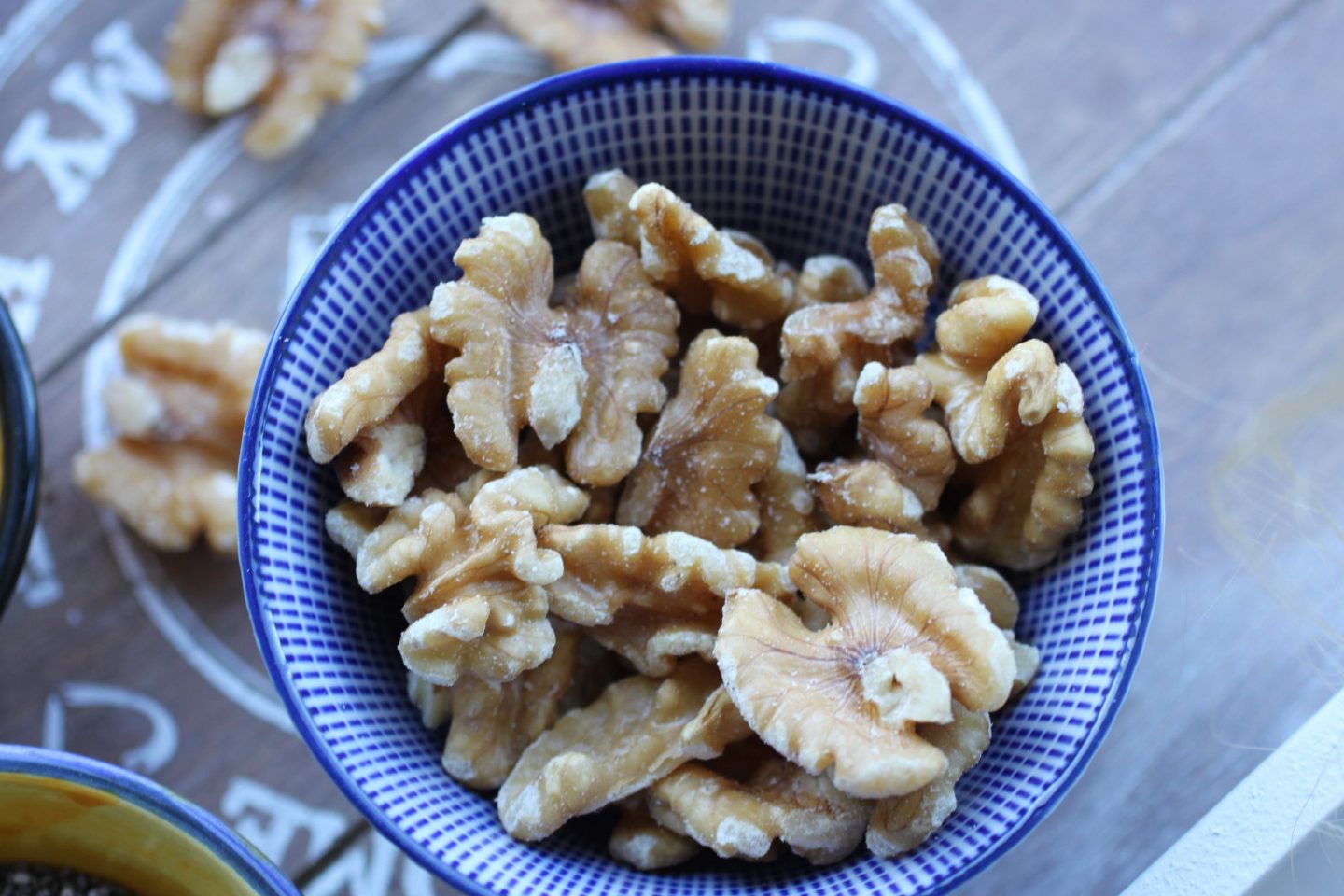
As you can see, the whole foods are a lot more balanced, but they contain less of the omegas. Omega 6 isn’t something most people are lacking, but if we switch the commonly used sunflower for something like walnuts, which are higher in omega 3, we start to see more benefits. 1 tbsp of walnut halves contain roughly half of the RDA of omega 3, a tbsp of walnut oil contains over 100%. Which is a very easy way to add omegas to your diet if you don’t get them from things like oily fish.
Omega content of commonly used oils (per tbsp)
All are roughly 120kcal per spoon and the information below is presented omega 3 values, percentage of RDA, followed by the same for omega 6.
- Sunflower oil – 0g (0%), 9g (75%)
- Olive oil – 0.1g (9%), 1.3g (11%)
- Sesame oil – 0.04g (4%), 5.6g (47%)
- Walnut oil – 1.4g (129%), 7.2g (60%)
- Coconut oil – 0g (0%), 0.2g (2%)
Are oils bad for you?
In huge amounts, oils are generally speaking not the best for you, but their benefits could be essential for your nutritional needs. If your dietary preferences don’t include a lot of foods high in omega 3 or 6, a walnut oil based salad dressing could go a long way in easily delivering your healthy fats. Whole food fats do contain a wider variety of vitamins and minerals, and are more balanced in terms of providing protein and fibre too, but they’re a lot harder to get in in the quantities required if eating them isn’t something that comes naturally to you. Avoiding or limiting oils is fine if your diet contains other sources of ‘good’ fats, but it’s not necessary to remove them for a healthy and balanced diet even if you do get your essential fats from whole food sources.
How do you get your healthy fats? Do you get a good balance or would adding some oils to boost your omega intake be helpful?
Until next time,
Sophie
Great post, Sophie! I honestly never really pay attention in general but I don’t enjoy oily food. I’d say most of my good oils come from eating fish, nuts and avocados! Thanks for sharing this informative post xx
Lynn | https://www.lynnmumbingmejia.com
This was an interesting read as I tend to stay away from oils! However I probably don’t get too many ‘good fats’ so I think an oil dressing as you suggest would probably be a good idea for me personally.. also I have never had walnut oil!!
Great post! Very informative and I love how you break down the contents of each oil so it’s more comparable. Thanks for sharing!
I was beginning to wonder if it was bad that I had zero oil in my diet but at least I’m doing good somewhere. If I had to use it, I would but I rarely have to! xD
This is actually really interesting I didn’t know this much about oil at all, I’ve found I use sesame/olive oil more than anything else so I’m going to check the values out for those. I didn’t even know that walnut oil was a thing x
Such an important + detailed post!! Thx for sharing!
xx Sara
https://thecliqueblog.com
I’m not much into oils. The most i put them on is in salads. I think it would be good to try and consume them a bit more.
http://www.fashionradi.com
This is a very good informative post. I gained new knowledge reading it. Thank you for sharing.
This is great! I started moving away from oily food and I feel a lot better!
I always learn so much reading your posts and this one is no exception. I guess I never really thought about oils and their pros/cons but it’s quite fascinating seeing the difference between the nuts/seeds and the oil equivalent.
Lovely and well researched points here. I appreciate seeing the nutritional breakdown of the different oils you touched on.
This is a good summary and comparison! Thank you for sharing 🙂 We don’t use a lot of oil – mostly for cooking really – but we do have nuts and the kids eat fish to help get more healthy oils and fats in their diet 🙂
Hope you’re having a good weekend 🙂
Thanks for the info! I don’t pay too much attention, but I know I don’t eat oils much except in salad dressings and nuts. It might be good for me to add some more healthy oils to my diet. 🙂
Thank you for sharing sweetie, I learnt so much!
Danielle | thereluctantblogger.co.uk
Great post! Thank you for sharing this! It’s so helpful and informative! I totally agree with you that you don’t have to completely cut out oils from your diet.
Such an interesting read, Sophie. I use a bit of coconut oil and MCT oil, and then olive oil in my cooking. I think there must be a good balance in everything we eat, and oils are no exception!
It’s so true that oily food may not be the best for you and that oil does have some good benefits. This is good information about oils
this was super duper informative & i learned a lot!! i think i’m doing a lot better at getting healthier fats in my diet this year. i’ve eaten more nuts & i use olive/coconut oil in my cooking all the time. i need to expand a little for sure & make sure i’m getting enough of the right kinds of fats x