
A coastal holiday is easy to plan around the obvious things: a good hotel, a beach nearby and enough time to spend outside. Food usually ends up mattering just as much, especially at smaller resorts where the restaurant isn’t treated as a backup option for guests who don’t want to leave the property. The better places use fish from nearby waters, seasonal vegetables, local cheese and bottles produced in the same region instead of relying on the same international menu every night. That matters when you’re staying somewhere for more than a few days.
Southern Europe gives travellers plenty of choice, but the food changes quickly from one coast to another. Cyprus is known for halloumi, grilled meat, seafood, olives and shared plates, while Sardinia has bottarga, fregola, pecorino and a strong seafood tradition of its own. On the Algarve, sardines, clams, prawns and grilled fish are everywhere, while the Croatian coast has Adriatic seafood, olive oil and local cheeses on menus in small ports and island towns. You don’t have to chase famous restaurants either. A good lunch near the water can tell you plenty about what a region cooks well.
For travellers staying in a villa or resort in Cyprus, it also makes sense to keep some food and drinks at the accommodation. After a long day at the beach, you might not want another reservation, especially if you’ve already eaten out several nights in a row. Bread, fruit, cheese, a few snacks and something cold to drink are enough for an evening on the terrace. You can always decide later whether you’re staying in or heading out.
For drinks to keep at a villa or take to dinner, Punin Wine has a Cyprus-based catalogue covering wine, Champagne, sparkling wine, spirits, beer and cider, as well as cigars, gifts, soft drinks, sweets and accessories. The selection isn’t limited to one type of bottle, so it’s useful for different parts of a coastal trip. You can pick something for a seafood dinner, an afternoon on the terrace or simply keep a few bottles at the accommodation for the week. On a longer stay, that’s often easier than making plans to go out every night.
What to check beyond the hotel
Large coastal hotels can be very self-contained, with several restaurants, private beach areas, spas and enough activities to fill most of the week. That’s convenient, but it’s still worth checking what sits outside the gates before booking. A hotel within walking distance of a town, marina or public beach gives you more options once you want a change from the resort. The Algarve has Atlantic cliffs and broad beaches, Croatia has small bays and old stone towns, Sardinia gets quieter away from its busiest resort areas, and Cyprus stays warm enough for outdoor dining well into the evening. If you’re staying for several days, it’s useful to know whether you can walk somewhere for coffee, lunch or a swim away from the main beach. According to the European Environment Agency’s 2025 assessment, all 123 monitored coastal bathing waters in Cyprus were rated excellent.
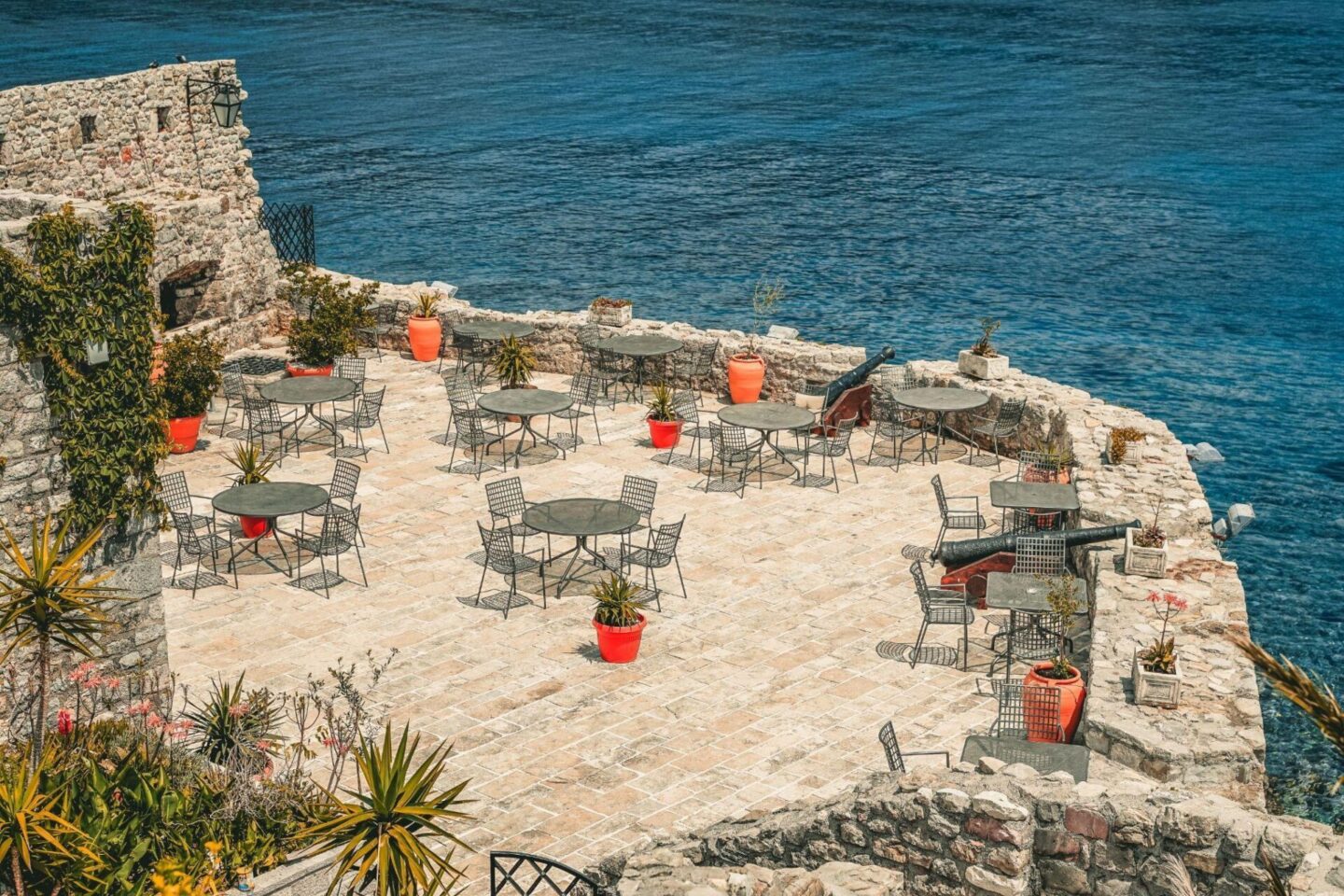
Resort restaurants have become much more local
Not so long ago, the food at many large resorts followed a predictable international formula. Guests could order almost the same pasta, steak, club sandwich and grilled salmon whether they were in Spain, Greece or somewhere on the eastern Mediterranean. That approach hasn’t disappeared completely, but good coastal hotels now put far more local food on the menu. In Cyprus, dinner might include halloumi, olives, dips, grilled octopus, lamb, fresh fish and vegetables served across several plates, while Sardinia offers fregola, bottarga, pecorino and seafood. Along the Portuguese coast, restaurants might build lunch around clams, prawns or whatever fish came in that morning. If the staff point you towards one fish or one local dish, it’s usually worth listening.
Lunch by the water
Gourmet travel tends to focus on evening restaurants, but lunch often suits a coastal holiday better. After a morning at the beach, the table is usually outside, people are still in casual clothes, and lunch might be little more than grilled fish, salad, bread and a cold drink. Harbour restaurants are especially good for this because their menus often depend on the catch and they’re usually less formal than hotel dining rooms. Asking what came in that morning is often more useful than asking what dish is most popular.

What to eat on different European coasts
The phrase “Mediterranean food” is convenient, but it hides plenty of regional difference. Olive oil, vegetables, seafood and herbs appear in many places, yet the dishes themselves change from one coastline to another. Add the Atlantic coast of Portugal and the differences become even clearer. If food is part of the reason you’re travelling, those details are worth paying attention to.
| Destination | Food to look for | Good time to try it |
| Cyprus | Halloumi, octopus, grilled fish, lamb, olives | Dinner outdoors after sunset |
| Sardinia | Bottarga, fregola, pecorino, shellfish | Long lunch near the coast |
| Algarve | Sardines, clams, prawns, fresh fish | Late lunch by the harbour |
| Costa Brava | Anchovies, shellfish, rice, tomatoes | Lunch in a small coastal town |
| Croatian coast | Octopus, sea bass, local cheese, shellfish | Evening meal in a small port |
Trying everything on a list isn’t really the point. It’s more useful to see what a restaurant is proud of, ask what’s fresh that day and notice what keeps appearing on menus around town. A famous regional dish might be worth ordering, but sometimes the simpler local preparation is what people actually eat most often. That’s usually the more interesting thing to find.
Drinks for hot evenings and seafood dinners
Warm weather changes what people actually want to drink. Heavy reds can be excellent in the right setting, but they aren’t always the first choice on a hot terrace beside the sea. Dry whites, rosé, sparkling wines and lighter reds are often easier with fish, shellfish, salads and grilled vegetables. Pairing doesn’t need to become complicated, but a few combinations are handy to remember.
- Grilled fish usually works well with dry white wine with good acidity.
- Shellfish can go with either white or sparkling wine.
- Richer seafood dishes can handle fuller-bodied whites.
- Salty cheeses often work well with sparkling wine.
- Lighter reds can suit grilled meat on warm evenings.
- Very spicy food is usually easier with drinks that aren’t too high in alcohol.
Serving temperature matters outdoors too. A bottle that starts properly chilled can warm quickly before sunset, so an ice bucket is useful for more than Champagne. The same goes for water during dinner, especially if the table gets direct sun. After half an hour outside, the difference is obvious.
Leave the resort for at least one meal
Even a very good hotel restaurant gives only one version of local food. A small family-run place, a harbour grill or a restaurant in the old part of town will usually have a different menu and a different pace. Instead of asking hotel staff for “a good restaurant,” ask where they’d go for grilled fish, a casual Sunday lunch or a particular local dish. The menu might be shorter and the furniture more basic than at the hotel, but that doesn’t tell you much about the food. Sometimes the best meal of the trip comes from somewhere you walked into because it smelled good or because every table was full. That’s a perfectly good reason to give it a try.

Keep the food plan simple
A food-focused resort holiday needs some planning, but not much. It makes sense to reserve one or two restaurants that would be difficult to visit otherwise, especially during high season. It’s also useful to check market days, local specialties and whether the hotel has restaurants that genuinely differ from each other. Everything else can stay fairly open.
A simple balance usually works well: one ambitious dinner, one casual seafood lunch, a trip to a market, at least one meal outside the resort and an evening with food bought locally and eaten back at the hotel or villa. That gives you enough variety without filling every day with bookings. Swim in the morning, eat when you’re hungry and don’t rush away if lunch runs long. If you come home remembering a harbour lunch, a bottle opened on the terrace or a dish you’d never tried before, the food part of the trip went well.
Leave a Reply